Saturday, 21 November 2015

India Gate


Location: Near Rajpath

Metro Station: Pragati Maidan

Timings: Morning to Night

Entry: Free

Days Closed: None

Photography Charges: Nil


At the centre of New Delhi stands the 42 m high India Gate, an "Arc-de-Triomphe" like archway in the middle of a crossroad. Almost similar to its French counterpart, it commemorates the 70,000 Indian soldiers who lost their lives fighting for the British Army during the World War I. The memorial bears the names of more than 13,516 British and Indian soldiers killed in the Northwestern Frontier in the Afghan war of 1919.

The foundation stone of India Gate was laid by His Royal Highness, the Duke of Connaught in 1921 and it was designed by Edwin Lutyens. The monument was dedicated to the nation 10 years later by the then Viceroy, Lord Irwin. Another memorial, Amar Jawan Jyoti was added much later, after India got its independence. The eternal flame burns day and night under the arch to remind the nation of soldiers who laid down their lives in the Indo-Pakistan War of December 1971.

The entire arch stands on a low base of red Bharatpur stone and rises in stages to a huge moulding. The cornice is inscribed with the Imperial suns while both sides of the arch have INDIA, flanked by the dates MCMXIV (1914 left) and MCMXIX (1919 right). The shallow domed bowl at the top was intended to be filled with burning oil on anniversaries but this is rarely done.

During nightfall, India Gate is dramatically floodlit while the fountains nearby make a lovely display with coloured lights. India Gate stands at one end of Rajpath, and the area surrounding it is generally referred to as 'India Gate'.

Surrounding the imposing structure is a large expanse of lush green lawns, which is a popular picnic spot. One can see hoards of people moving about the brightly lit area and on the lawns on summer evenings.
Bahai Temple


Location: Near Kalkaji Temple,
East of Nehru Place
Nearest Metro Station: Kalkaji
Mandir
Open: Tue-Sun;
Mondays closed
Timings: 9am to 5:30pm
Entry: Free
Photography: Permission
required


East of Nehru place, this temple is built in the shape of a lotus flower and is the last of seven Major Bahai's temples built around the world. Completed in1986 it is set among the lush green landscaped gardens.

The structure is made up of pure white marble The architect Furiburz Sabha chose the lotus as the symbol common to Hinduism, Buddhism, 
Bhai Temple
Jainismand Islam. Adherents of any faith are free to visit the temple and pray or meditate.

Around the blooming petals there are nine pools of water, which light up, in natural light. It looks spectacular at dusk when it is flood lit.


Online payza account create video


Daily jobs

India vs Pakistan in December: Tough but don't rule it out yet

Image Credit: Getty Images.
After making a strong statement by starting clean-up in the Indian cricket board, the newly-elected president of the Board of Control for Cricket in India (BCCI), Shashank Manohar, faces a tricky situation in relation to India's proposed bilateral series with Pakistan next month.
Pakistan Cricket Board (PCB) chief Shahryar Khan has made it clear that Pakistan will not tour India to play the bilateral series scheduled in December, and India have reiterated that they aren't comfortable with the idea of Pakistan hosting India in the United Arab Emirates (UAE). While the standoff continues, the Memorandum of Understanding (MoU) signed between the two boards may leave the Manohar-led BCCI with no choice but to honour the commitment.

ALSO SEE SL and Bangladesh may host

The previous BCCI administration, led by N Srinivasan, had signed an MoU with the PCB to play six bilateral series under the 2015-2023 Future Tours Programme (FTP). Though it was something inked by an ousted administration, it's the BCCI who had committed, not any individual, which leaves Manohar facing a tough call.
PCB’s stand on playing their arch-rivals has been consistent and they have said that they will host India in the UAE, which is a neutral venue, but won't travel to India as the BCCI urges because they don't want to send their team to the UAE.

ALSO SEE PCB says no to series in India

UAE has been hosting Pakistan’s home games since the terrorist-attack on Sri Lankan cricket team in Lahore in 2009.
The ball is now in BCCI’s court and if they don’t want to go and play in the UAE and still want a series with Pakistan in December, then they will have to make their counterparts an offer they can’t refuse.

ALSO SEE India safe to host series: VVS

To that effect, Rajeev Shukla came out with an interesting offer wherein he confirmed that the BCCI is willing to compensate PCB for the losses it would incur by not having a 'home' series with India. A response to that is yet to come out from the PCB office.
PCB's argument that why should they play their ‘home' series in India makes sense but considering Manohar's stance to clean the image of Indian cricket, it's difficult to see him take a chance by travelling to a land where the fixing mess started in 1999-2000. But then there's the MoU signed by the Srinivasan regime.

ALSO SEE Ind-Pak series not possible: Raja

India had also travelled to the UAE for the opening leg of the Indian Premier League last year, but Manohar was not at the helm then, and it's a lot different in the BCCI with him calling all the shots.
While the BCCI has time and again said that the decision to play Pakistan depends on the Indian government, there has been no official statement given by the government so far. There have only been sketchy reports about some BCCI administrators meeting government officials, but nothing beyond that.
Broadcast rights for the series is another Achilles heel for the series. PCB has a five-year deal with Ten Sports that includes two home series with India while Star is the official broadcaster for BCCI and they won’t allow Ten Sports to broadcast the series.
So if not the UAE, is the BCCI open to other options?
Rumour mills are in overdrive mode on that question, with some sources also suggesting that Sri Lanka and Bangladesh have unofficially been approached to check if they are ready to host the high-octane series.
It seems both the boards are willing to go the distance and explore every option to make it happen. So don't be surprised to see the series going ahead at the end of this dramatic affair.
A 57-year-old Muslim lady in Kerala, who has never stepped into a cinema hall, steps into one to watch a movie. Everyone who has seen the movie is calling up everyone they care for and asking them to see this movie.
A movie, 'Dhrishyam', is creating waves in Kerala. It has broken all collection records in the history of Malayalam cinema. It is bringing people in hordes back to the theatres. Looks like it is headed for 100 plus days in theatres. Its lead actor Mohanlal says what happened to his character, George Kutty and his family is something that should not happen to anyone anywhere. Its popularity is worrying top police officers. who are now saying that the message in this movie is wrong and Mohanlal, arguably India's most natural actor, should not have played the role of the school dropout George Kutty.
'Dhrishyam' is the brainchild by a young and very promising Director Jeethu Joseph. It is the story of a cable TV operator, his wife and two daughters. An incident of bullying using a mobile clip of the teenage daughter, taken clandestinely by the wayward son of a senior police officer changes everything. It leads to a crime. The father takes it upon himself to protect them from the crime. The movie buff cable operator outwits the investigators at every step using his filmy experiences.
Why is this movie then such a draw. Yes, it has Mohanlal essaying one of his finest acting moments. Yes, it is a brilliant murder mystery. It has no item girls...no popular songs, no fights. But this movie is much beyond the star, the plot and the screenplay.
I think it is about family. This movie has unnerved yet educated lakhs of families. A family is a safe harbour from the storms of the adversary. Here a relatively new adversary - cyber bullying - has been introduced in a shocking manner. Most families are aware of this, but thought this will not happen to them. This movie helps them take guard and be prepared to handle the new devil. In my student days parents worried about love affairs, cigarettes, alcohol and drugs. Online and virtual intrusion is here to stay. The movie is a cinematic eye opener.
In a world of turmoil and uncertainty, it is more important than ever to make families the centre of our lives. The protagonist, George Kutty was convinced that he was doing the right thing when he protected his daughter and wife who committed a crime without intent. Before the law he is in the wrong. But for him he did the right thing. Most of his audiences seem to agree with him. More and more families are watching this movie to get the lesson right. To ensure that they don't have to go through this cinematic experience in real life.
To revert to the debate triggered by a top police officer that the message in the movie is wrong. He said the family that features in the movie should have informed the police about the bullying and not taken law into their hands. But the director has taken the route of shock and awe. Over half (52 per cent) of children in India have been bullied online, according to a survey released by Microsoft. China and Singapore are the only countries where cyber bullying is a bigger menace. There is a serious problem. If a movie has raised an alarm and has communicated to people the perils of online intrusion it has send a message. It has done its job.
I am told the movie will be remade in Hindi and many other Indian languages.


Beautiful christain song sneham

Saturday, 14 November 2015

God


This article is about the concept "God" in the context of monotheism and henotheism. For the general concept of "a god", see Deity. For God in specific religions, see § In specific religions. For discussion of the existence of God, see Existence of God. For other uses of the term, see God
"God the Father", a representation of the theistic version of God, byLudovico Mazzolino (1480 – c. 1528)
In monotheism and henotheism, God is conceived as the Supreme Being and principal object of faith.[1] The concept of God as described by theologians commonly includes the attributes of omniscience (infinite knowledge), omnipotence (unlimited power), omnipresence (present everywhere), omnibenevolence (perfect goodness), divine simplicity, and eternal and necessary existence. In theism, God is the creator and sustainer of the universe, while in deism, God is the creator, but not the sustainer, of the universe.Monotheism is the belief in the existence of one God or in the oneness of God. In pantheism, God is the universe itself. In atheism, God does not exist, while God is deemed unknown or unknowable within the context of agnosticism. God has also been conceived as being incorporeal (immaterial), a personal being, the source of all moral obligation, and the "greatest conceivable existent".[1] Many notable medieval philosophers and modern philosophers have developed arguments for and against the existence of God.[2]
There are many names for God, and different names are attached to different cultural ideas about God's identity and attributes. In the ancient Egyptian era of Atenism, possibly the earliest recorded monotheistic religion, this deity was called Aten,[3] premised on being the one "true" Supreme Being and Creator of the Universe.[4] In the Hebrew Bible and Judaism, "He Who Is", "I Am that I Am", and the tetragrammaton YHWH are used as names of God, while Yahweh and Jehovah are sometimes used in Christianity as vocalizations of YHWH. In Judaism, it is common to refer to God by the titular names Elohim or Adonai, the latter of which is believed by some scholars to descend from the Egyptian Aten.[5][6][7][8][9] In Islam, the name Allah, "Al-El", or "Al-Elah" ("the God") is used, while Muslims also have a multitude of titular names for God. In Hinduism, Brahmanis often considered a monistic deity.[10] Other religions have names for God, for instance, Baha in the Bahá'í Faith,[11] Waheguru in Sikhism,[12] and Ahura Mazda inZoroastrianism.[13]
The many different conceptions of God, and competing claims as to God's characteristics, aims, and actions, have led to the development of ideas of omnitheism,pandeism,[14][15] or a perennial philosophy, which postulates that there is one underlying theological truth, of which all religions express a partial understanding, and as to which "the devout in the various great world religions are in fact worshipping that one God, but through different, overlapping concepts or mental images of him.

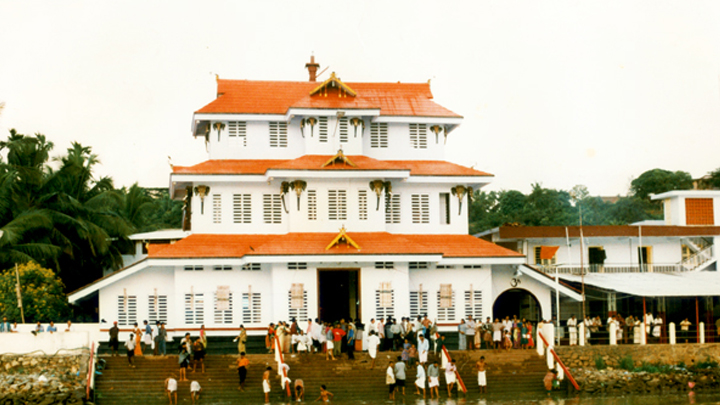
Parassinikadavu Sri Muthappan Temple, Kannur

This centre of worship and faith has in store many unique practices and rituals, and the temple architecture itself stands testimony to this aspect. Located 20 km away from Kannur, a northern district of Kerala, the Parassinikadavu Muthappan (Siva) Temple on the banks of the Valapatnam River attracts people from all sections of the society; irrespective of religion, caste and promotes the essence of "Vasudaiva Kutumbakam - The whole world is one family."

The origin of the Muthappan temple is connected to the appearance of a child who roamed the region with a string of interesting incidents and later vanished without a trace. The incidents up to the point of his disappearance later made the denizens feel the divine presence of Muthappan (Siva) who immediately erected a place of worship, which today is popularly known as the Parassinikadavu Muthappan Temple.

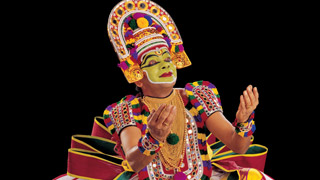
The temple is also a popular destination for travellers and pilgrims to savour the charm of Theyyam, a ritual that is performed here on a daily basis. Men adorning masks and costumes with a riot of colours perform this temple art form and it represents conflict between good and evil, with good ultimately emerging victorious

'Spider temple’ in Adoor


Adoor: This temple is the only one of its kind, which offers remedy for spider venom. Located at Kodumon in Pathanamthitta district, this temple draws hundreds of devotees from far and wide. People suffering from skin ailments caused by spider venom offer puffed rice to the deity and smear the holy ash given from the temple, all over their body. The water in the ‘Spider Well’ (Chilanthi Kinar) is thought to be the best cure for Skin Diseases. This unique temple is dedicated to Goddess Mahalakshm and people from all caste and creed worship here.
It is believed that within a week even the most serious skin ailments caused by spider bites will be fully cured. Located at a distance of 8km from the town ofAdoor, this unique temple is more famous by the name of ‘spider temple’, these days.
Chilanthi Ambalam

Chilanthi Ambalam (Temple Dedicated to Spider Deity)

The Palliyara Sree Bhagavathy Temple, renowned to the devotees as the Chilanthi Ambalam (place of worship dedicated to sanctified or deified spider) is a sacred temple of worship for those ailing and suffering from spider poison or toxins.

Kodumon in Pathanamthitta district is also the birth place of Sree Sakthibhadra, the author of the famous Sanskrit play, “Ascharya Choodamani “.  An organization entitled Sakthibhadra Samskarika Kendram is now functioning at Kodumon with a view to erect a proper and befitting memorial to Sakthibhadra. He was the first among the Sanskrit Scholars of South India in the 9th century AD to compose an admirably full blown drama.  The Ascharya Choodamani was the first among the original Sanskrit dramas of South India.

10 KM away from Adoor and 11 km from Pathanamthitta, the temple is located in the back drop of the Sakthibhadra Samskarika Kendram Complex which is   located one kilometer east of the Kodumon market centre on the Chavara Pathanamthitta P.W.D   road. It is believed to be only one of its kind in India which attracts thousands of devotees from far and near for the purpose of divine healing.

Bharani pattu


Chilanthi ambalam pattanamthitta


Kottiyoor temple maholswavam


china android phone market


2015 stock market